Never Correct Me in Public Again
Correcting others over pocket-size things is rarely chosen for. For this reason, information technology'south important to know how, when, and when not to right, and also what to say and do when the criticism is aimed at you.
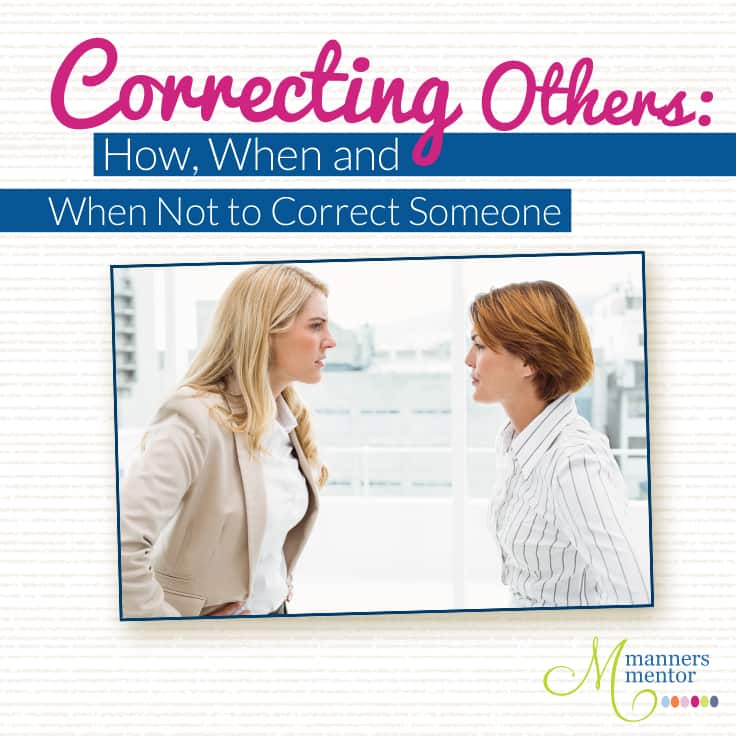
By: Maralee McKee, Manners Mentor
"Information technology is much easier to be critical than to be right." ~Benjamin Disraeli
Nit-picking — it seems to be almost a national sport the way some folks participate in it and so oft and enthusiastically. It's sad that sometimes, when people speak, their words seem more spit out than thought out. These are the words of the "correctors," "nit-pickers," and "accusers."
Correcting others over small things is rarely chosen for, it seldom wins anyone friends, and on the rare occasion when it is called for, it'southward tricky to attain politely. For these reasons, it'south important to know how, when, and when non to correct someone.
We have a family unit member who has mistakenly pronounced Miami as—"My-am-a" her whole life.
Do nosotros correct her? No manner!
Now xc years former, and a Florida native and life-long resident, she'due south enjoyed visiting Miami many times. She no longer travels, but the word comes up fairly ofttimes in her conversations because she delights in sharing stories near visiting in that location when she and her belatedly husband were newlyweds, and later World War II when they would vacation in beautiful "My-am-a" with their two young sons.
I was told that years agone, family members would correct her: "Aunt Sarah, it's Miami."
But she likes her way of proverb it. Somewhere along the way, it became her term of endearment for the city. I believe she purposefully never changed the way she says it. And now that she'south xc years old, nosotros wouldn't think of bringing information technology to her attention and causing her embarrassment.
At xc, I recollect you deserve a complimentary laissez passer on being corrected for but about everything.
When family members did right her, it was privately, gently, and from a place of dear.
Most of us aren't and then fortunate.
Stories grow, and it has happened to me, well-nigh being called out in person in front of family members, coworkers, friends, and anybody and everybody else for modest things, from incorrectly quoting a motion picture line, to saying something happened on a Tuesday when information technology occurred on a Wed, to getting the proper noun incorrect of the restaurant an incident occurred in while telling a great story ("We were waiting on a table in the antechamber of Olive Garden, non Red Lobster.").
Take you been there? Allow's all say "ughhhh" together!
Is information technology Ameliorate to Correct or Not Correct Details?
Correcting sets the person "directly," only it comes at the price of embarrassment. So should nosotros correct someone over things that don't bear on others?
If nosotros do correct someone, whom exercise we correct?
Whose infractions exercise we ignore?
If you do demand to correct someone, how do you do it in a fashion that the person wants to thank you instead of resent you?
The answer to all these questions: well…they vary depending on who the person is in relation to you, the time and place, and whether the correction will take a positive impact.Hither's how to decide how, when, and when not to correct someone.
The Gold Rules of Correcting Others
Get-go, let'southward have a look at the commandments of correcting those effectually united states of america.
• Correcting, fifty-fifty when information technology'due south our children, should accept place privately. When correcting an adult or kid in public, the person remembers the embarrassment they felt more than the "correct answer" to what they were corrected for.
•"Um, actually…" Any follows these two words unremarkably doesn't bode well for the other person. Think before saying them, because they tend to be the currently near used precursors to correcting someone almost the most little bit of information. For example, while binge-watching "Sherlock," yous mention the lead histrion'southward name, and the person watching with you says, "Um, actually…his last name is Cumberbatch, not Cumberhatch." A more than polite way would be to say, "I saw him interviewed, and he was introduced equally Benedict Cumberbatch. It is rather a tongue twister of a name."
•Before correcting others, specially when correcting them publicly, ask yourself this question: Will the information I give past correcting them bring about enough "good" to commencement the embarrassment they will experience? Only if the answer is aye should y'all proceed.
•Corrections that upshot in the person thanking you instead of resenting you are ones that you made: privately, gently, and with an explanation of why you feel the correction was needed. (Examples of how to exercise this are below in many of the other bullet points.)
•Whom do you accept the responsibility to right? Your children and your employees. (Coworkers are sometimes, only not usually, included. Come across more about this beneath.)
•Whom tin can you correct in dearest without information technology probably pain your relationship? Your spouse, claret relatives with whom y'all have a positive human relationship, in-laws with whom you have a very positive relationship, and your closest friends.
•What's the best way to correct your children? Simply state the correct thing they should have said. When the correction doesn't take place right away considering there are others around, and depending on your children's age, you might need to remind them of what they said that was incorrect, but if that office isn't needed, it's best to skip it.
For instance, let'due south say you lot and your son are in the family room equally he describes something that happened at school today: "…and and then Mom, she jumped out of her seat once again and went to the pencil sharpener for the 3rd time during the test!!! Later on that, Mrs. Alexander taked her out in the hallway to talk to her almost it. When she came dorsum, Laurel didn't look happy, only she didn't leap out of her seat for the rest of the day."
You would right him simply past using the word he should have used at your first opportunity in the conversation: "So, Mrs. Alexander tookLaurel out in the hallway to talk to her privately. Since she didn't jump out of her seat again, I guess it helped her understand how getting up during the test was distracting others from beingness able to concentrate."
•What's the kindest manner to go nigh correcting your spouse, relatives, best friends, and such when you've determined the correction is needed? When no one else is effectually, you mention what the person stated incorrectly, that you lot happened to notice, and that yous thought yous'd bring it to the person's attending because, if it were you, you lot'd appreciate knowing. When possible, finish on a positive note.
For example: "Uncle Dave, I heard you mention at the political party tonight that Mom and Dad will be celebrating their thirtieth wedding ceremony this year. Information technology's actually going to exist their fortieth. I mention it because Robert and I are both over thirty, and Mom would exist embarrassed if others thought she had two of her children years earlier she was married. Non to worry, afterward such a long time, dates are easy to mistake."
In the above case, the niece could, and probably should have, corrected her uncle on the spot since his mistaken remark could set off a whole slew of people "wondering" almost things. Whenever possible, soften the correction with a petty humor. If humour isn't your thing, or you just can't think of anything at that moment, get ahead and right, but merely make certain to be gentle, equally we've already adamant.
Your tone of vox will convey as much of your heart as your words will when correcting someone.
Your goal is to articulate upwardly misinformation that matters.
In this case, during the party every bit the niece overheard her uncle, she could have said something like, "Mom and Dad are going to exist celebrating their fortieth anniversary this year, everyone! Isn't it amazing how subsequently a while decades seem to fly by as rapidly as years?"
In this instance, she didn't use humor, but she corrected the information gently, she didn't brand fun of her uncle for misspeaking, we tin can imagine that her tone was kind, and she brought upwards another subject to talk about — how fast time flies. These tactics deflected the focus of her words from the correcting of her uncle to the new topic of time flying. Savvy!
In case people around you tend to gossip more than correct, this mail on Gossip: How to Protect Yourself and Others offers solid help.
How to deal with the nit-pickers and correctors in your life!
How and When Do Y'all Correct Someone In Front end of Others?
When is it improve to correct someone publicly than to let information technology slide?
•Whatever time someone'southward wrong information would direct touch on the deportment of others and crusade them to make a fault or agree a mistaken belief.
For example, if I say from the podium or lectern that our next meeting will be held on the fifteenth of the month, just it'southward on the twentieth, you'd desire to say something and then that everyone doesn't show up on the wrong date.
If you lot can land why or how y'all know, information technology's e'er good to add that in because it helps people decide which person is right. "Excuse me, Maralee. Next month's meeting is on the twentieth. I remember because I typed side by side month'south newsletter and got it ready to email yesterday."
•If a coworker is giving incorrect information to another associate or a client, you'd speak up for the same reasons, and in the same way as in the higher up example. For coworkers who frequently are incorrect, y'all'd want to chat with them privately as a friend. If that doesn't help, and then take the matter to your boss.
• If y'all're out and well-nigh and hear strangers talking, and one is giving incorrect information, you can interject in order to keep someone from making a fault. Permit'south say you're in Starbucks when someone asks for driving directions. The man he asked tells him to take a right on I-75 to become to his destination; however, having lived in the area for years, you know that he needs to accept a left, or he'll be heading in the wrong direction.
Say something like, "Hi, I apologize for interrupting. I only happened to overhear the directions. Yous'll want to take a left on I-75. I interrupted because I've gone the wrong management before, and the next get out is a good 15 miles out of your way!"
The commuter will thank you! In fact, he'll thank you for miles, and miles and miles!
What To Do If Correction Turns to Criticism
•First, assume the best of the person(due south), especially if this behavior is out of their norm. Maybe they're mad at their spouse and their anger is causing their tone to be harsh. You lot usually tin defuse this by saying something along the lines of, "Have I done something that'south causing anger? I'm hearing a harsh tone." If you notice, I didn't use the word "you lot" in the instance. Anytime you tin can give an "all I" argument, information technology comes off as less accusatory.
•Are you pretty sure they said what they did purposefully to embarrass or anger you because, alas, that's the way they are? Using good manners means we're quick to lay out the welcome mat for others, but information technology never suggests we're to make ourselves doormats.
Stick up for yourself, but take the higher ground. The view is better from up there. 🙂
Say something like this: "Was that argument meant to embarrass me?" or "Was that meant to make me look similar I didn't know what I was talking nigh?" or "Is there a deeper issue at play here?"
These statements, when said non-threateningly, help them understand that you lot're all the same willing to give them the benefit of the dubiety, but that you lot'll stand your ground. It's probably simply the correct question to go them to realize they've overstepped, or to get them to say something that gives you insight into the real result they accept.
•When someone begins to degrade, criticize, talk sharply, or utilise a raised phonation to you, it's perfectly fine to speak upwards in front of everyone present and say, "This is a private conversation that needs to continue in private. I'll exist happy to talk more near it when things are calmer." When possible, alibi yourself and walk abroad.
Putting some time between the estrus of the moment and when you finish the conversation gives the other person a chance to calm down, and it gives you the opportunity to examine the situation and effigy out what you want and demand to say.
If you take some critics in your life, here's a post well-nigh The 5 Manners of Dealing with Difficult People .
What'southward Next?
The nit-pickers, the correctors, and the accusers volition always be with us, but now we know how best to handle them. That's ane of the benefits of manners. It gives united states best practices for situations and so that the side by side time nosotros encounter that state of affairs, nosotros can supersede "What am I going to exercise?!" with "Yes! I've got this!"
If you enjoyed this post, why not subscribe? Subscribing is easy, and you get a free gift, as well! Subscribe now; it only takes a moment. Enter your starting time name and your favorite email address in the box below this post or whatever page of the web log. Your free dining-skills book will exist sent to you via email within two hours. From family unit meals to the nigh of import of business occasions, you'll be the one others look up to for answers at every repast!
If you enjoyed this post, please help spread the Manners Mentor Movement by subscribing to the blog and Sharing, Liking, Pinning and emailing this mail service to your friends, family and those in your social media circles. Anybody has a "corrector" in their life, and then they'll thank you for information technology!
Until next week, keep doing what you were put here to practise! Bless those around you lot by being you…at your all-time!
PS: All the conversation is taking place in the comments nether this mail over at the Manners Mentor Facebook page . Bring together over nine,300 of the nicest people you'd always want to meet for this conversation and daily inspiration, tips, and a sprinkling of this-and-that which y'all'll detect fun and rewarding!
XOXO,
Source: https://www.etiquetteschoolofamerica.com/how-when-and-when-not-to-correct-someone/
0 Response to "Never Correct Me in Public Again"
Post a Comment